


Special Needs Trusts
Houston Special Needs Trust Attorney
Plan for a loved one’s future while carefully considering their financial support, independence and public-benefit eligibility.
Serving Harris, Brazoria and Montgomery Counties.

Special Needs Planning
Planning for a Loved One
with a Disability
Leaving money directly to a person with a disability may affect eligibility for means-tested benefits such as Supplemental Security Income and Medicaid. However, leaving nothing may prevent family resources from improving that person’s quality of life.
A properly prepared special needs trust can hold and manage assets for a beneficiary without giving the beneficiary unrestricted control over the property. The trust must be carefully drafted, funded and administered according to applicable benefit rules.
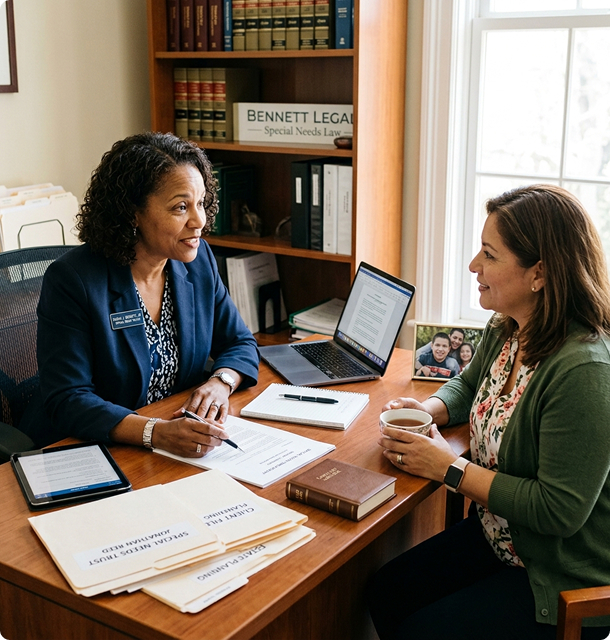
Attorney Megone Trewick helps families create plans based on the beneficiary’s needs, available resources and long-term care considerations.
Understanding Special Needs Trusts
What Is a Special Needs Trust?
A special needs trust, sometimes called a supplemental needs trust, is created to hold property for a person with a disability. A trustee manages the assets and makes permitted distributions according to the trust’s terms.
The trust is generally intended to supplement, rather than replace, qualifying public assistance. Depending on the trust and applicable rules, funds may support needs involving:
- Education and training
- Transportation
- Personal care
- Medical or dental expenses not otherwise covered
- Technology and communication devices
- Recreation and social activities
- Furnishings and personal items
- Other permitted quality-of-life expenses
Improper distributions may affect public benefits, so the trustee must understand the applicable restrictions.
Trust Types
Types of Special Needs Trusts

Third-Party Special Needs Trust
A third-party trust is funded with property belonging to someone other than the beneficiary, such as a parent, grandparent or other relative. It may be created during the person’s lifetime or through an estate plan.
The person creating the trust can determine who should receive any remaining property after the beneficiary’s death, subject to the trust’s terms.

First-Party Special Needs Trust
A first-party trust is funded with assets belonging to the person with a disability. These assets might come from an inheritance, legal settlement or property already owned by the beneficiary.
First-party trusts must satisfy specific legal requirements and may require Medicaid reimbursement provisions after the beneficiary’s death.

Pooled Trust
A pooled trust is established and managed by a nonprofit organization. Each beneficiary has a separate account, but the organization pools funds for investment and administration.
The appropriate trust depends on who owns the assets, the beneficiary’s age, the benefits involved and the family’s goals.
Who Needs Planning?
Who Should Consider Special Needs Planning?
A special needs trust may be appropriate if:
- Your child or relative has a disability
- The beneficiary currently receives SSI or Medicaid
- The beneficiary may need public benefits in the future
- You want to leave an inheritance without giving direct control
- A person with a disability receives a settlement
- The beneficiary needs long-term financial management
- Relatives want to contribute to the beneficiary’s future
- Your existing will leaves property directly to the beneficiary
Planning early can help family members coordinate gifts, beneficiary designations and inheritance decisions.
Choosing a Trustee
Choosing the Right Trustee
The trustee is responsible for managing trust property and making distributions that follow the trust’s instructions. The trustee may also need to maintain records, communicate with benefit agencies and understand how distributions could affect eligibility.
Choose someone who is:
- Trustworthy and financially responsible
- Familiar with the beneficiary’s circumstances
- Able to follow detailed benefit rules
- Willing to maintain accurate records
- Capable of serving for the required period
Depending on the family’s needs, an individual, professional trustee or qualified organization may serve.

Estate Plan Coordination
Coordinating the Trust with Your Estate Plan
Creating the trust is only one part of special needs planning. Your will, life insurance, retirement accounts and other beneficiary designations must be reviewed to avoid leaving assets directly to the person with a disability.
Family members who intend to provide financial support should also understand how to direct appropriate property to the trust.
The plan may include:
- A will naming the special needs trust
- Properly coordinated beneficiary designations
- Instructions for future trustees and caregivers
- Powers of attorney and healthcare documents
- Planning for future living and support needs

TRUST PLANNING
Why Choose Trewick Law Firm?

Planning Focused on the Beneficiary
The personalized plan is developed around the beneficiary’s needs, abilities, benefits, and quality of life.

Clear Guidance for Families
Megone explains the trust structure, funding process and trustee’s responsibilities in understandable language.

More Than 18 Years of Experience
Megone brings extensive experience involving estate planning, probate, guardianship and family-related legal concerns.
YOUR QUESTIONS ANSWERED
Frequently Asked Questions
Will a special needs trust guarantee benefit eligibility?
No. Eligibility depends on the trust’s terms, funding, distributions and applicable program rules. The trust must be properly structured and administered.
Can family members contribute to the trust?
Family members may be able to contribute to an appropriate third-party special needs trust. Contributions should be coordinated with the estate plan and benefit requirements.
Can the beneficiary serve as trustee?
Giving the beneficiary control over distributions may affect the trust’s intended purpose and benefit treatment. An appropriate independent trustee is commonly selected.
START PLANNING TODAY
Plan for Your Loved One’s Future
Trewick Law Firm can help you create a special needs plan that supports your loved one while carefully considering public benefits and long-term financial security.


